
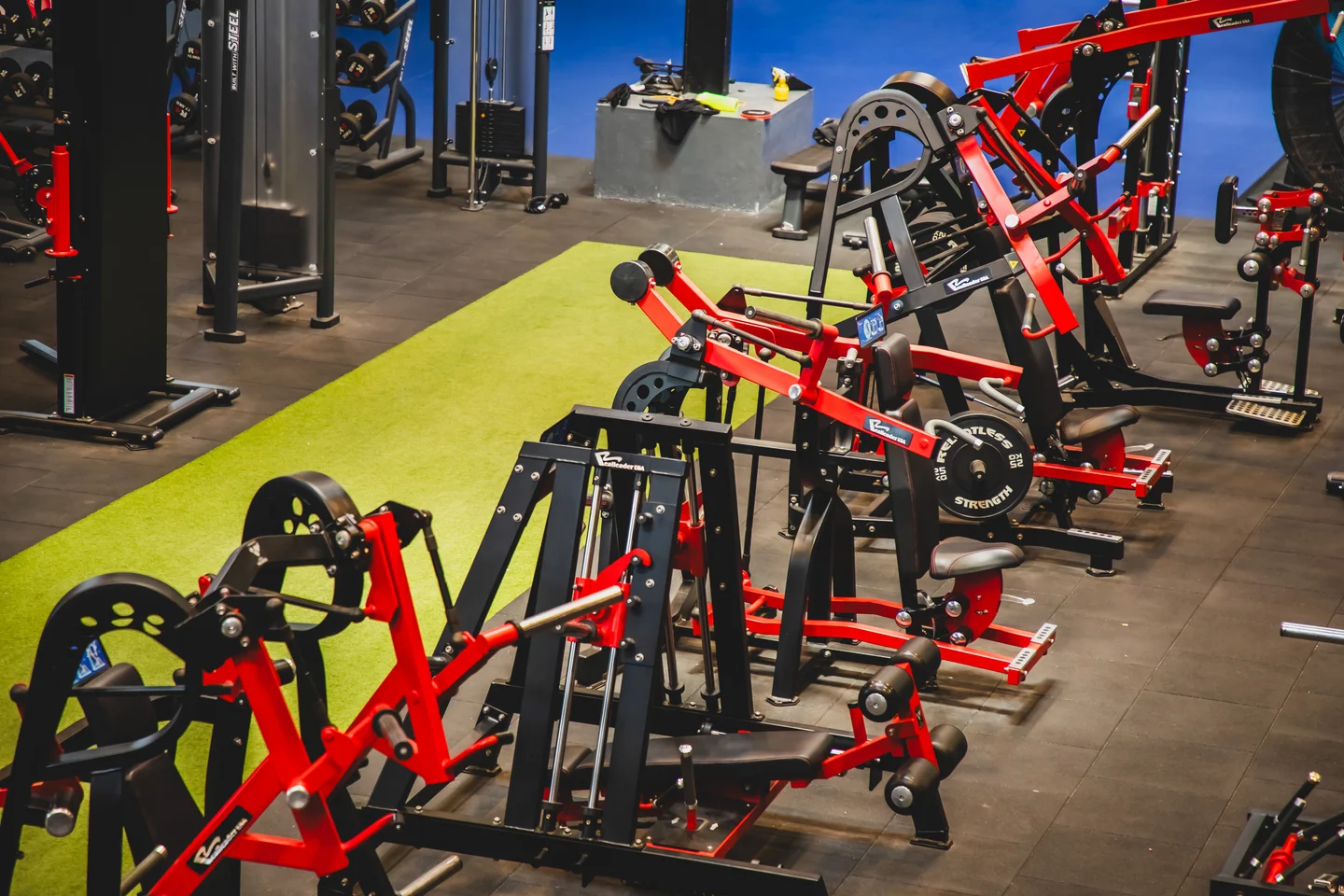
Walk onto the Sarjapur Road floor and you’ll find 20,000 sq ft of training space, industrial fans and a community getting to work. Our heat poster starts a useful conversation: what happens when we train in a warmer environment, and what makes the air in a gym good to breathe?
There can be benefits to getting used to the heat. Those benefits depend on sensible exposure, recovery and conditions that let you train safely.
Give your body time to adapt
Repeated, gradual exposure to warm conditions can improve how your body handles heat. Sweat responses and circulation adapt; at the same workload, heart rate and body temperature may be lower after acclimatisation. The practical benefit is being better prepared for activity in warm weather. Adaptation varies with the person and the conditions. Read the CDC’s explanation of heat acclimatisation.
Sports research describes adaptation over roughly one to two weeks of repeated exposure, with particular relevance to endurance activity and competition in the heat. That is useful context for Bengaluru training, rather than a promise that a hotter gym will build more muscle. A demanding session still needs enough recovery and a workload you can manage. See the sports-medicine consensus on training in the heat.
Airflow deserves attention
A fan moves air. Ventilation replaces indoor air with outdoor air. A good training environment needs attention to both: moving the same air around does not, by itself, remove pollutants.
When fresh-air supply is insufficient, pollutants from indoor sources can accumulate. Sealing a busy room for cooling without adequate ventilation can therefore create an air-quality problem even when the room feels comfortably cold. Outdoor air quality matters too; opening windows beside heavy pollution is not automatically an improvement. The aim is an appropriate supply of clean air. The EPA explains how ventilation affects indoor air quality.
Where AC fits in
Air conditioning is not inherently bad for air quality. Cooling, fresh-air ventilation and filtration do different jobs. A well-designed, maintained system can support comfortable temperatures and cleaner air; suitable filters can reduce airborne particles. Cooling alone is no guarantee of fresh air, and filtration cannot remove every pollutant. Maintenance, moisture control and sufficient ventilation matter more than an “AC” or “non-AC” label. Read the EPA’s guide to filtration and cleaner indoor air.
For our members, the useful question is whether the space supports a good session: manageable temperature, effective air exchange, maintained equipment and room to recover between efforts. A warmer room should never become a test of how much discomfort you can ignore.
Train with the conditions
- Start more gently when you’re new to warm-weather training, and adjust effort on unusually hot days.
- Keep drinking water available, take recovery breaks and choose a cooler time of day when necessary.
- Check in with your training partner and coach. Feeling faint or weak is a reason to stop and move somewhere cool, not push through.
Exercise in heat increases the risk of dehydration and heat illness. Seek medical help if heat-illness symptoms occur. Fans and fitness do not make anyone immune. See the CDC’s advice for athletes in hot conditions.
Bring consistency, listen to your body and let your coach help you find the right pace. That is how a community gym helps you build a routine you can keep.