
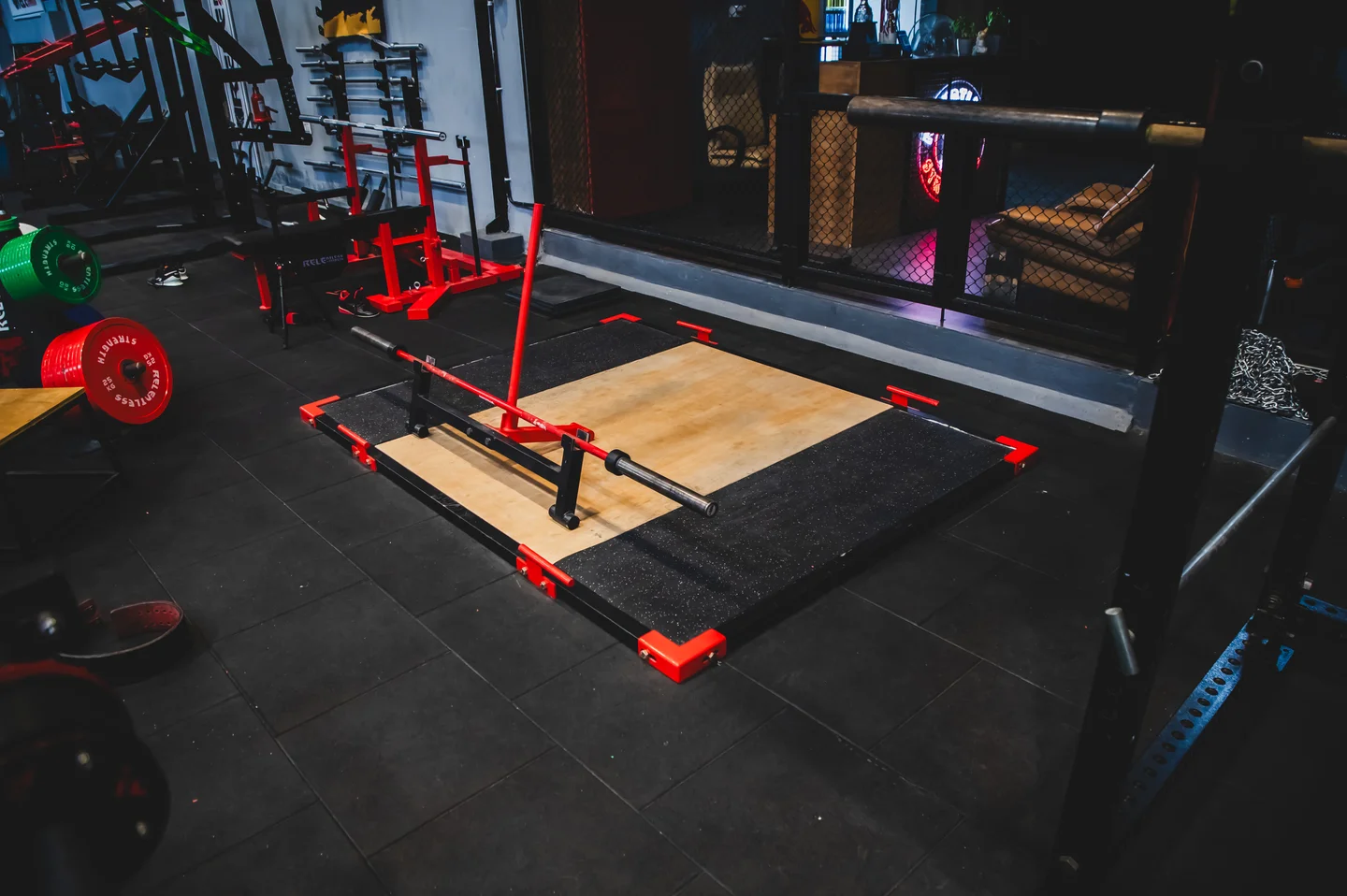
Three lifts make up a powerlifting meet: the squat, the bench press and the deadlift. You can train those same lifts at the gym whether you want to compete or simply get stronger. The bar you pick and how you practise depend on what you’re training for.
What is powerlifting?
- Squat. With the bar across your upper back, bend your hips and knees, reach the required depth and stand back up.
- Bench press. Lie on the bench, lower the bar to your torso, pause for the referee’s command in competition and press to arm’s length.
- Deadlift. Lift the bar from the floor and finish standing upright. In a meet, wait for the down command before returning the bar to the platform.
In a standard three-lift meet, you get three attempts at each lift. Your best successful squat, bench press and deadlift add up to your total. For example, 100 kg, 70 kg and 130 kg make a 300 kg total. Commands, equipment and judging details vary by federation, so read your meet’s rules before entering. International Powerlifting Federation rules.
Which barbell are you picking up?
Knurling is the textured grip on the shaft. Whip is how much the shaft flexes under load. Sleeves are the ends that hold the plates and can rotate independently of the shaft.
- General-purpose bar. A straight bar for a mix of squats, presses, rows and deadlifts. It’s a practical starting point when you’re learning several movements.
- Power bar. A stiffer straight bar, often with more pronounced knurling. Choose it to practise the squat, bench press and deadlift on a setup similar to a meet that uses one bar for all three lifts.
- Olympic weightlifting bar. Rotating sleeves help the plates turn independently as the bar changes direction in the snatch and clean. IWF competition uses 15 kg and 20 kg bars.
- Deadlift bar. Usually thinner and more flexible than a power bar. Some meets allow it, so check the rules if you want your training setup to match the platform.
- Trap bar. A frame you stand inside, with handles beside you. It’s useful for a deadlift variation or loaded carries.
- Safety squat bar. A padded bar with forward handles that gives you another way to set up for a squat.
Check the end cap or ask the gym team before logging your weight. Specialty bars vary, and a bar that looks familiar may weigh something different. Barbell design reference.
Different ways to lift
- Powerlifting is practice for the heaviest successful squat, bench press and deadlift under meet rules.
- Olympic weightlifting contests the snatch and the clean and jerk. Both finish overhead and reward timing and technique. The two weightlifting lifts.
- Strongman and strongwoman competitions can include heavy carries, stone loading, overhead pressing and pulls. The event list sets the training priorities.
- Bodybuilding and hypertrophy training focus on building muscle. Barbells, dumbbells, cables and machines all give you ways to train a muscle through a range of motion.
- General strength training builds capacity for everyday life, sport or whatever you enjoy doing. Squats, hinges, presses, pulls and carries are movements you can build a programme around.
On your first visit to Relentless, tell the team what you want to get better at. Start with a load you can control, learn how to set up the rack and safeties, and write down the bar, weights and reps you used. That gives you a starting point you can come back to.